By Arindam Singha
A fired heater is typically one of the most complex pieces of equipment in a refinery or petrochemical complex, and its design requires a multidisciplinary engineering approach. There are few examples of equipment that demand the combined knowledge and expertise of fluid dynamics, heat transfer, chemistry, metallurgy, reaction engineering, strength of materials, and solid mechanics to achieve an optimal heater design that meets customer specifications. The next session covers basic heater design and interdisciplinary engineering necessary for these projects.
How It Works
In a typical gas-fired heater, hydro-carbon gases combust via burners inside a chamber, generating abundant hot flue gas. The process fluid flows through a coil inside the chamber and is heated by radiant and convective heat transfer from the hot flue gas. Heaters usually have two distinct sections. In the radiant section, or “firebox”, process coils are directly exposed to the flame, and the dominant mode of heat transfer is radiation from flame and flue gases to coil. In the convection section, hot flue gas flows at high velocity over the process coils, and heat is transferred from flue gas to process fluid mainly by convection. Normally, the process fluid moves through the convection section first and then through the radiant section before exiting the heater at a defined outlet temperature.
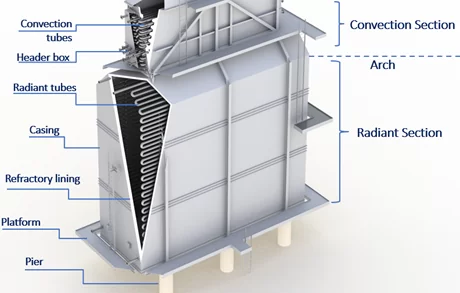
Figure 1: standard cabin-type direct fired heater
Design
Heater design usually begins with the customer specifying the amount of process fluid they want to heat and what are the desired inlet and outlet temperature and pressure. Additionally, at this point, the user might specify the available plot space for the heater, fuel composition, heater type, etc.
Thermodynamics is used to calculate the required absorbed duty of the process fluid. For the given inlet and outlet temperatures, an energy balance calculation determines the required heat input for the process fluid. How is this done? What size should the process coil be? What did the client specify as maximum pressure drop in the coil? The Darcy-Weisbach equation can be used for turbulent pipe flow to determine the length and diameter of the process coil to satisfy the pressure drop requirement. With a short coil length and large diameter, the pressure drop will be small. The coil should have enough heat transfer surface area (i.e. long coil) to meet the required absorbed duty, but that increases pressure drop. Therefore, the fired heater engineer needs to carefully balance these seemingly contradictory requirements in design. Other questions to ask: any phase changes in the process fluid? Is it a liquid, vapor, or changing from liquid to vapor? Learning about multiphase regimes can help solve that riddle.
Once the process coil design is underway, focus shifts to the burner design to supply the firebox with heat. Installation includes a number of burners to burn the fuel, typically with air, and supply heat to the process fluid. This is a good time to ask more questions, like: how much fuel is needed to burn? How much air is required? We can calculate fuel and air requirements using basic reaction engineering and stoichiometry. How to ensure the correct amount of fuel gets to the burners? Knowledge of compressible fluid dynamics. What about designing a nozzle to operate at choked flow conditions for the given fuel delivery pressure? How to calculate nozzle size? Consult some gas dynamics textbooks. Once the fuel nozzles are sized, how to ensure the correct amount of air gets to the burner? By throttling through a properly designed burner throat. How to do that? Refer to Bernoulli’s principle in fluid dynamics textbooks.
Now for the hard part: constructing the heater. It is usually designed with steel plates supported by beams and columns fastened by welded and bolted joints. Castable or blanket refractories attach to the plates to prevent heat loss from the heater. Knowledge of plate and shell theories, trusses, and solid mechanics is necessary. A basic understanding of foundation design is useful as the heater needs a sturdy foundation. This foundation design can become further complicated when the design must accommodate forces like earthquakes, snow loads, or high wind speeds.
The next step is metallurgical engineering for material selection. How to choose the coil material? Basic stainless steel or high-grade alloys? How are the coils supported in the heater? What thickness of coil? This requires calculations from solid mechanics and strength of materials. Knowledge of thermal stress and material behavior at high temperatures is also useful.
The cherry on top is understanding and utilizing advanced simulation techniques, like Finite Element Analysis (FEA) and Computational Fluid Dynamics (CFD). Existing heaters can be made more efficient and more environmentally friendly by analyzing and improving flue gas pattern in the firebox and/or complex fluid-structure interaction analyses to evaluate thermal stresses on system components, a newer method called reliability engineering.
Fired heater design can feel like rocket science, so trust the experts at XRG to take your project to the moon. Ready for takeoff? Watch out for XRG’s next webinar and prepare to take flight.