By Adam Henderson, Senior Applications Engineer at XRG Technologies
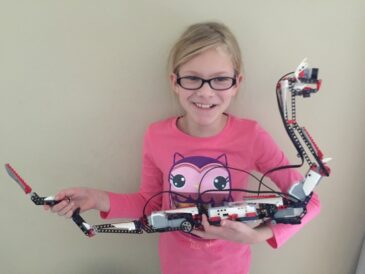
If you had a time machine, what would you tell your younger self about becoming an engineer? I recently faced this query when my college-bound daughter decided to pursue an engineering degree. This exercise inspired a list of the top “dos and don’ts” for young engineers. While schools and employers help develop technical skills, it’s my honor to nurture the non-technical skills that separate good engineers from the great. Although there are many traits that contribute, I will focus on what I consider to be the top three: communication, practical experience, and big picture thinking.
Communication
We’ve all worked with brilliant individuals who were ineffective in their roles. For engineers, this mismatch often stems from poor communication skills. How many ideas are stuck in the heads of engineers – forever unimplemented because they cannot explain it properly?
- Learn to teach. Most engineers interact with non-technical people daily. Sometimes we have to explain the implications of a design change to the schedule or budget. This requires bridging the gap between non-technical and technical. For example, estimators or purchasing departments may need to understand why a certain specification has additional cost. Also, a manager may not understand a unique solution or how it benefits the company. A good communicator can adapt their teaching to the technical level of the audience. You can practice this by teaching an internal training program, mentoring another engineer, or even teaching a class at a local college. Give as many presentations as you possibly can and hone that specific skill. It will be invaluable no matter which path your career takes.
- Learn to listen. I’ve sat through many meetings that were unnecessarily long due to poor listening. How many times have you heard someone answer a question that was not being asked? In many cases, this can be traced to a rushed response from an overeager engineer. A good listener will know how to verify or clarify the problem before coming up with a solution. A good listener checks underlying assumptions. Active listening helps spotlight the “real” problem. We often find better solutions after digging deeper into the problem. Strong listening never leads to worse design.
- Ability to switch communication styles. There are three main ways to get a point across. A majority of my daily communication is on the phone. Being able to explain an idea verbally is critical in an increasingly virtual world. Take time before a call to gather all relevant information. It is easier explaining something in front of you when compared to explaining something you are having to visualize. Practice verbal communication by explaining something visual entirely with words. Paradoxically, we can improve verbal communication by practicing a nonverbal skill: writing. Since email is one of the core modes of communication in business, being able to thoroughly yet concisely explain a concept is critical.
Don’t forget visual communication. Remember that a picture is worth a thousand words. Being able to draw, even simple hand sketches, can reinforce an email, report, or in-person conversation. A good graph, picture, or video can explain a concept or problem easily. Doing photography or drawing as a hobby helps develop skill, but it also trains your brain to see details that you might otherwise overlook.
Practical Experience
Coming out of college during a recession meant taking a job I hadn’t expected when I chose to become an engineer. For three years I worked as a field hand on oil rigs. My engineering designs have benefited from this practical work.
- Get field experience. In the field, I worked in rain, sleet, snow, and heat sometimes with incorrect or inferior tools. I’m sure my assembly or installation methods were not what the design engineer expected. Now, when making design decisions, I consider unintended abuse to equipment and the real environment in which it will operate. For instance, I know that a drain connection on a pressure vessel is a tempting step to reach a temperature gauge carelessly located seven feet above the walkway.
Field experience also helps when visualizing equipment in its final location. Many times, my experience has helped when revamping fired heaters. For instance, I can easily visualize the length of a bolt and the wrench needed to field-install a tube support. Field experience helps me recognize equipment staging considerations when revamping a heater in the tight confines of a refinery.
- Learn a trade skill. While getting my master’s degree, I worked near the local trade school where I took evening machining classes. For the first couple classes, I listened to the other students (current shop hands) complain about their company’s engineers. They were shocked to learn that I was an engineer, but quickly respected my decision to learn their job to make myself a better engineer. They also provided plenty of free advice. Like field experience, it’s important to understand how a piece of equipment will be made. It’s important to consider the access or working space needed by the machinist or welder? How will the equipment be lifted or maneuvered in the shop? How do I ensure everyone’s safety when fabricating this equipment? It is important to think through all aspects of a design, starting from how it will be manufactured through how it will be used and maintained.
- Be willing to travel. Big companies always need good engineers willing to relocate. Not only is this a good opportunity to see the world, but it also builds a resume with unique project experience. There are also financial incentives for engineers willing to work anywhere. Travel takes us out of our comfort zones and challenges our preconceived notions, much like we’re taught in engineering school. It broadens perspectives and teaches us to engage with different people.
Big Picture Thinking
Engineering school sometimes encourages very narrow views of problems. Many recently graduated engineers get buried in the details, missing the forest for the trees. While attention to detail is valuable, it also helps to keep the big picture in mind. To do this, I suggest engineers should:
- Understand the business. The engineer’s goal is to make money for the company via engineering knowledge and problem-solving skills. It’s often unnecessary to write a dissertation on a solution – designs can be good enough. It might make sense to save engineering time by utilizing software or existing resources rather than designing from scratch. Good designs must also make sense economically. An engineer can improve a design’s profitability by reducing cost or adding value to the customer.
- Design outside the calculations and drawings. It’s easy when sitting in an office to get lost in the calculation, spreadsheet, or drawing. A trip to the field or shop can remind us that the straight line or perfect curve on drawings doesn’t exist in reality. For more involved heater revamps, I’ve found it helps to consider manufacturing and erection tolerances when modifying existing equipment. For instance, a stack can be leaning or be out-of-round. When attaching something to the stack, it helps to provide the field crew with a way to adjust the design as needed to achieve the intent. This could include spacers or a specific piece to be cut to length in the field. It’s also important for the engineer to communicate the end goal to the field crew. What are the critical final dimensions to the design?
Engineers should also have a big picture view beyond the operating design. How will the part be made? How will it be transported to the final destination? How will it be installed once there? How will it be maintained? Can it be removed or modified? Great engineers are distinguished from good ones by appreciating the difference in shipping an 8’ wide object versus a 12’ wide object, the difficulty of getting a 3’ object into a 24” x 24” access door, or the requirements to repair a stack damper at 200’ elevation.
- Don’t be afraid to be wrong. Many engineers often think they are expected to have all the answers and to always be right. Some sit quietly in brainstorming sessions for fear of being “wrong”. I’ve proposed many crazy ideas in meetings that became the final solution. Sometimes, those crazy ideas help someone else evolve their idea. Voice your ideas and see what sticks!
Engineering is a rewarding and challenging career. My daughter will do well with engineering, and hopefully, heed my advice… after all, there’s a first time for everything!